ServicesInsurance Claims
Insurance Claims Help in Farmersville
After a wreck, the insurance claim can feel like a second accident. We write a clear estimate, work with your adjuster on what the car needs, and repair panels that can be saved. You get your vehicle back fixed right, with paperwork you can follow.
What We Do on an Insurance Claim
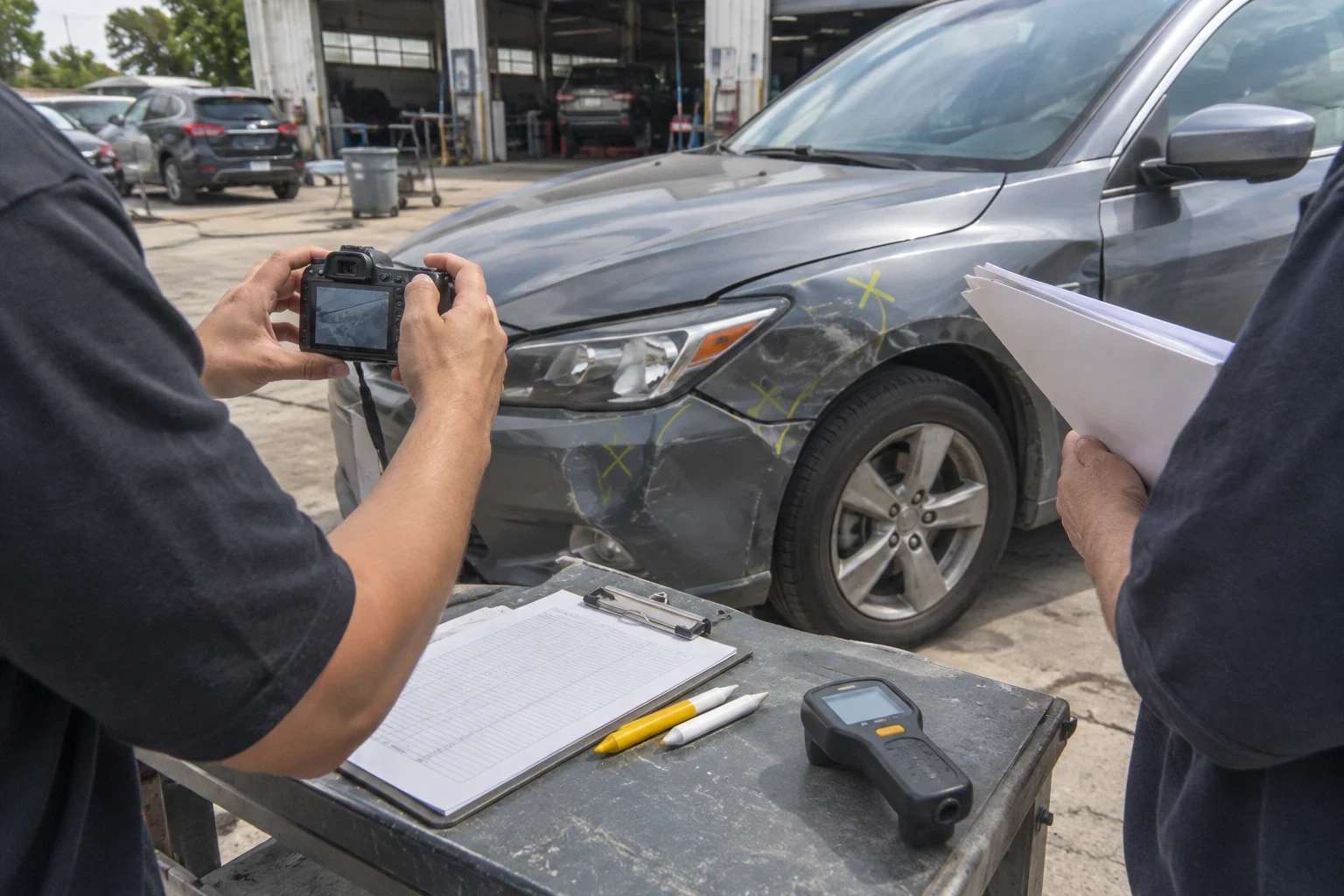
Your insurance company pays for the repair. We do the repair. In between sits an estimate, and that is where most of the confusion starts. We inspect your car, write down what was damaged and how we plan to fix it, and share that with your adjuster. When we find more damage after taking things apart, we document it and send it in so nothing goes ahead without approval.
We are not your adjuster, and we don't decide what your policy covers. What we can do is explain each line of the estimate in plain words, tell you when a part is worth repairing, and tell you when it really needs replacing. A bent fender that can be pulled and finished is often better left on the car. A cracked bumper bracket or a kinked structural rail is not.
In California, your insurer cannot require you to use a particular shop. You can bring your car to us whether the claim is on your policy or the other driver's.
What Our Claim Work Includes
A written, line-by-line estimate
Each panel, part and labor step gets its own line. You can see what is being repaired, what is getting a new part and why.
Photos of the damage
We photograph the car when it comes in and again when parts come off. Those photos go to your adjuster and stay on file for you.
Supplements for hidden damage
Bent brackets, cracked absorbers and damaged sensors often hide behind the bumper cover. When we find them, we send a supplement to the insurer with photos and wait for approval on that work.
Honest repair calls you can follow
If a panel can be straightened and refinished to hold up, we say so. If fixing it would cost more or leave a weak spot, we explain why a new part is the better call.
Paint matched to your car
We are PPG certified, and we blend new paint into the panels next to the repair so the color reads as one finish in daylight. Most insurance repairs involve some paint and refinishing, so this matters on nearly every claim.
Signs Your Claim Needs a Closer Look
- The first estimate looks too low
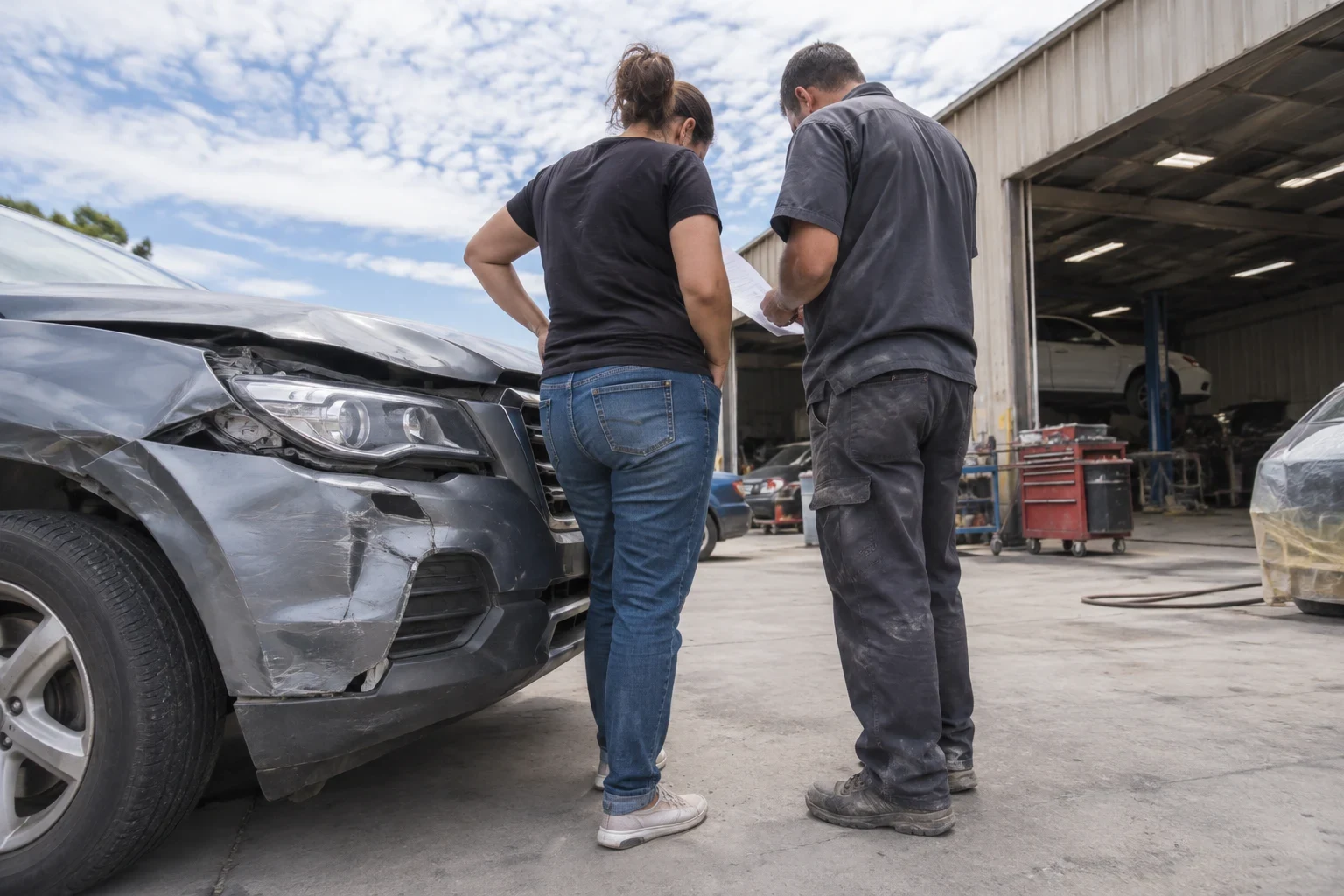
- Drive-through or photo estimates only see the outside. If yours lists a bumper cover and nothing behind it, there is a good chance more damage will turn up.
- Your car pulls or the gaps look off
- Uneven hood or door gaps, or a car that drifts on a straight road, can point to suspension or frame damage. That needs a proper inspection while the claim is still open.
- Warning lights came on after the hit
- Parking sensors, blind-spot radar and cameras live in bumpers and mirrors. A light on the dash means something needs checking or recalibrating, and that belongs on the claim.
- You aren't sure which policy pays
- If the other driver was at fault, their insurer may cover it. If not, your collision coverage and deductible come into play. We can walk through how each path usually works so you can decide with the facts in hand.
How a Claim Repair Goes at Our Shop
- 1
Bring your car in for a look
Have your claim number and adjuster's name handy if you have them. If you haven't filed yet, that's fine. We can inspect first so you know what you're dealing with.
- 2
We write the estimate and send it
We list the damage, the repair method for each part, and the paint and materials needed. That goes to your adjuster, and you get a copy.
- 3
Teardown and supplements
Once approved, we take the damaged area apart. Anything new we find gets photographed and sent to the insurer, and we wait for their okay on it.
- 4
Repair, paint and check
We straighten or swap out what the estimate calls for, refinish and blend the paint, then check panel gaps, lights and any sensors that were disturbed.
- 5
Pickup and payment
You pay your deductible, if one applies, and the insurer covers the rest of the approved repair. We go over what was done when you pick up your car.
What Affects the Cost of a Claim Repair
On most claims your out-of-pocket cost is your deductible, and the insurer pays the approved amount. What the repair itself costs, and how long the claim takes, depends on a few things. Knowing them helps you read your estimate.
- Damage you can't see
- A light bumper tap can hide a broken reinforcement bar or a bent radiator support. Hidden damage adds parts and labor, and it adds a supplement step to the claim.
- Fixing versus new parts
- Fixing a panel takes labor hours. A new panel takes the part plus paint. We pick whichever gives a sound result, and the estimate shows which way each part went.
- Parts type
- Estimates may call for factory parts, aftermarket parts or used parts, depending on your policy. The estimate should say which kind is being used, and you can ask us about the difference.
- Sensors and calibration
- Newer cars often need cameras or radar recalibrated after bumper or windshield-area work. That adds time and cost but is part of a safe repair.
Common Questions About Claims
- Can I pick your shop even if my insurer suggested a different one?
- Yes. California law lets you choose where your car gets repaired. Your insurer may hand you a list of shops, but you don't have to use it. Let your adjuster know we're doing the work and we'll handle the paperwork from our end.
- Should I file a claim or just pay out of pocket?
- It depends on the damage and your deductible. If the repair lands close to your deductible, paying yourself may make sense. We can inspect the car and write an estimate first so you have real numbers to weigh.
- What if more damage shows up once the car is taken apart?
- Work on that piece pauses. We take photos, write it up as a supplement and send it to your insurer. When they sign off, that part of the repair picks back up. Nothing lands on your bill that wasn't approved first.
- Will my car be repaired with new or used parts?
- That depends on your policy and what the estimate allows. Where a panel can be fixed well, we often keep it on the car. If the estimate lists aftermarket or used parts and you have questions, ask us and we'll explain what it means for your car.
- Who do I pay, and when?
- Your deductible, if you have one, is paid to us when you pick up the car. The insurer pays its share of the approved repair. If the other driver was at fault, their insurer may cover the full amount.
Get Your Claim Moving
Call and tell us what happened and who your insurer is. We'll set a time to look at your car and get the estimate going.